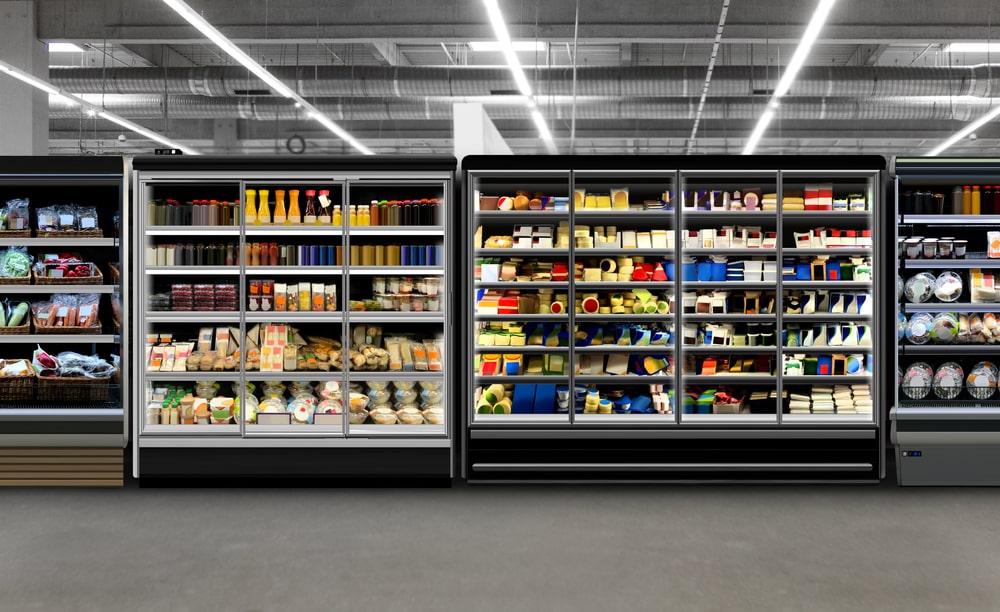
How to reduce the energy consumption of your fridge

With energy costs rising, it can be difficult to understand why you’re paying a certain amount, and what you can do about it.

Keep reading as we break down how you can actually reduce the energy consumption of your fridge.

How much energy does a commercial fridge actually use?

For businesses in the food, retail, and hospitality sectors, refrigeration can be one of the highest costs. Unlike lighting or ovens, refrigerators have to run around the clock. And, if you’re running a convenience store, a butcher’s, or a small supermarket, you’ll be well aware of this fact.

However, refrigeration can be a controllable cost, with costs varying across businesses and uses.

A commercial display fridge using 10 kWh per day consumes around 3,650 kWh a year. At an illustrative electricity rate of 25p per kWh, it would cost approximately £912.50 annually to run, excluding standing charges and VAT, before considering purchase price and maintenance costs.

Freezer temperature

Practical ways to reduce your fridge’s energy consumption

Get the temperature right

Overcooling is a waste of energy, with every degree colder contributing to consumption.

Generally, fridges sit at around 1-4℃, with commercial freezers being kept at -18℃ to -22℃. However, this varies, and should be compliant with your food-safety requirements and the manufacturer’s spec.

What’s more, alongside saving money through energy consumption, getting the temperature right can reduce spoilage.

Maintain door seals and gaskets

Faulty or worn door seals and gaskets can allow cool air to escape and therefore make the fridge work harder, leading to increased energy bills.

The paper test is a great way to check whether or not your door seal is working optimally. If you close the door on a piece of paper and it slides out easily, there’s a problem.

It’s important to keep gaskets free from grease and debris, while replacing them if cracked or deformed.

Gasket conditions are included in standard checks on planned maintenance visits, so it’s important to schedule these frequently.

Don’t overstock

Overstocking your fridge prevents optimal airflow circulation, reducing the risk of an uneven distribution of cool air and warm spots. Make sure vents and fan outlets are kept clear, there are gaps throughout the fridge, and avoid pushing stock against the back of the refrigeration unit. 

Schedule planned preventative maintenance

Planned preventative maintenance can catch the signs of a refrigeration unit failing early on – before it starts costing you a lot of money to run and repair.

What’s more, it can ensure longevity and efficient use, while reducing the risk of an emergency breakdown.

Monitor and benchmark energy use

It’s important to establish a baseline, whether that’s annual kWh from the bill or sub-metering on refrigeration where possible.

You can also read the fridge’s energy label or use a plug-in energy monitor to help with this. Additionally, an engineer can help with this during a survey.

Once you have these figures, you can benchmark these against sector norms, so you can reference whether your costs fit into a normal price range for accurate measuring and managing.
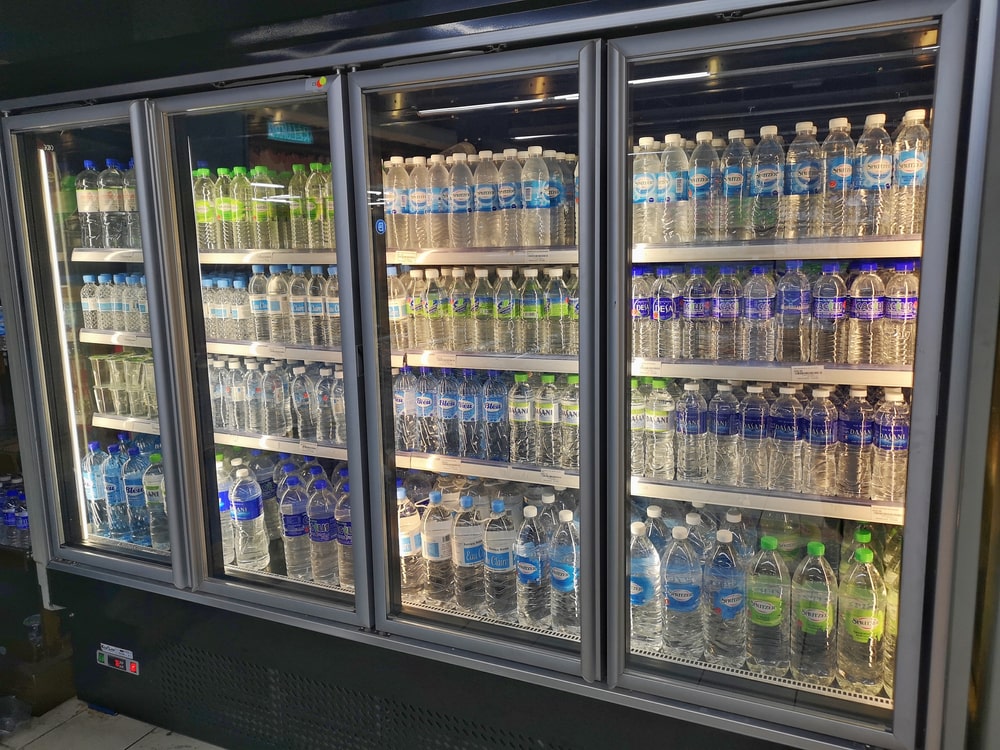
Commercial fridge repair

When to maintain vs when to upgrade

When considering when to maintain vs when to upgrade your fridge, there’s no single rule. Age, condition, refrigerant type, running costs, and compliance all play a role here.

As a general rule of thumb, repair if:

  • Your unit is relatively modern
  • Running costs appear normal
  • Breakdowns are rare

Replace if:

  • Future repairs are costly or uncertain
  • Energy costs are consistently high
  • You’re experiencing frequent breakdowns
  • A new A-rated efficient unit’s running-cost saving offsets the capital over its life.

At J&M Refrigeration, our engineers’ services include an energy consultation and on-site surveys. We can also advise whether it’s best to maintain or upgrade your unit and provide around-the-clock emergency repairs, planned maintenance, and custom refrigeration products. Get in touch today to learn more.
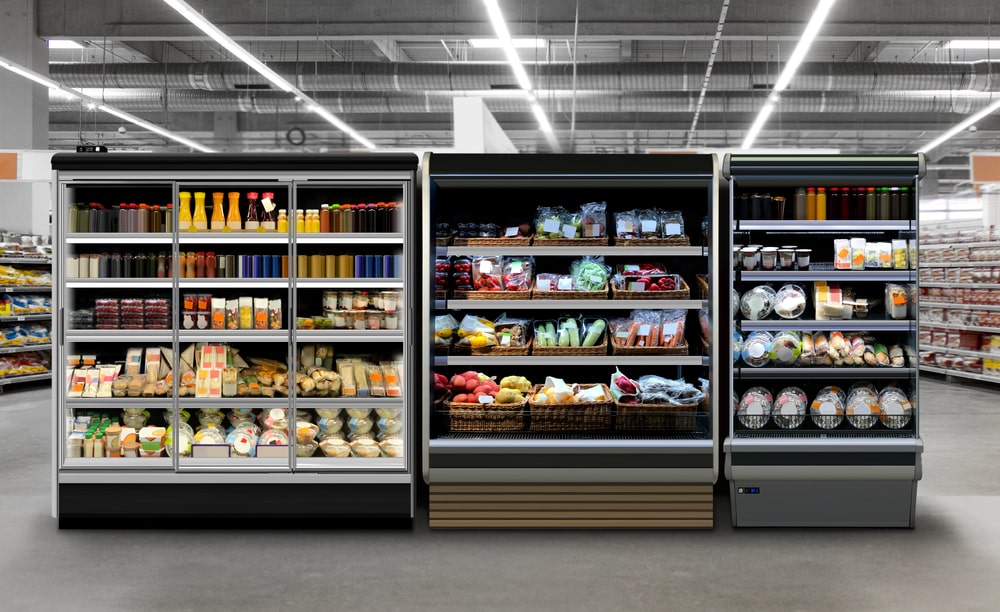
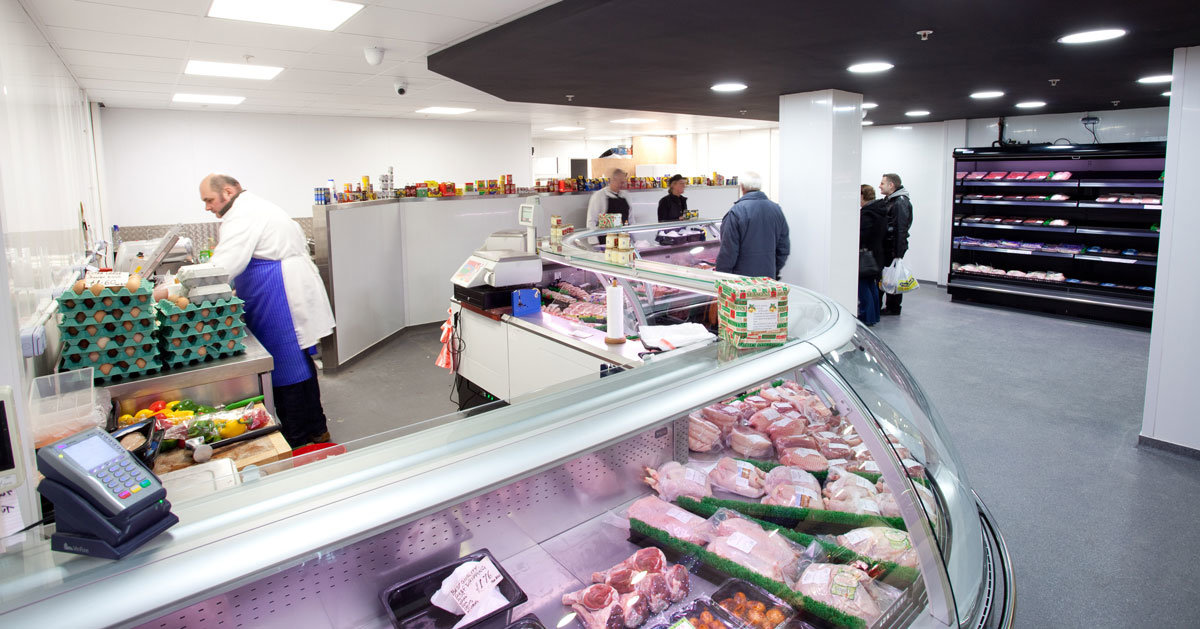
Tips to maintain commercial refrigeration during winter

From restaurants and cafes to butchers and supermarkets offering a fresh food section, winter commercial refrigeration system maintenance is crucial. Neglecting to care for your systems could result in expensive repairs in the near future, causing your profits to take an unwelcome hit.

So, why is commercial cooling unit and refrigerator maintenance in the winter months essential to your business, and what does it involve? Continue reading to find out more!

Why is commercial refrigeration maintenance important?

Winter can cause issues for our commercial refrigerators – as heater system usage increases to keep premises warm, our refrigerators must work harder to keep your produce cool.

By maintaining your commercial refrigerator and HVAC systems, you can ensure that your stock is kept at optimal and safe temperatures throughout the colder months, helping to keep businesses operating without disruptions.

If your systems break or aren’t running as they should be, profits will decrease, perishable goods will spoil, and your energy bills are likely to go through the roof.

One way to keep on top of potential issues is regular refrigerator maintenance. This involves routine monitoring that you should complete as part of your business operations, as well as professional servicing, which we’ll explore later.

Commercial refrigeration service

Top tips for industrial refrigerator maintenance during winter

Regular maintenance is the best way to ensure your commercial refrigerator system lasts for its expected life span and this is especially the case during the frigid winter months. Take a look at our helpful tips for correctly caring for your commercial fridge during the cold season.

Commercial refrigerators

1. Check its temperature settings

Sometimes, industrial refrigerators may be operating at an incorrect temperature setting, which can spoil produce.

Additionally, if your refrigerator system is set at a lower temperature than needed, this can result in unnecessary energy consumption, costing your business more money.

Check the thermostat, which is usually found near the front door of most refrigerators – if it isn’t set to the optimal temperature setting, recalibrate the thermostat to ensure a cold and steady temperature throughout winter, which should be between +5-8°C.

2. Clean the fridge and freezer condenser coils in your refrigerator

Your refrigerator coils are responsible for maintaining the desired temperature of your commercial refrigerator by releasing heat from within the appliance and into the air.

However, during the winter when your HVAC system is working overtime to keep your premises warm, these coils work much harder to maintain cold temperatures and keep your goods cool.

To ensure they’re performing optimally, use a small brush or air compressor to regularly remove dust and grime buildup that could insulate the coil and cause overheating.

3. Check refrigerant levels

Keep a close eye on the refrigerant levels in your commercial fridge this winter. These fluids work by transferring heat from the refrigerated space outside, preventing it from overheating.

Replenish your fridge’s refrigerants if they’re not at the levels recommended by the manufacturer.

4. Clean your fridge’s door gaskets and check for damage

Door gaskets, also known as refrigerator door seals, prevent unrefrigerated air from infiltrating and the cool air from within escaping. This helps to keep your produce at their optimal temperature and prevents spoilage.

Given the heating systems working within your property, it’s harder to maintain colder temperatures during the winter months, so you’ll need to ensure your door gasket is in good condition.

Remove each door seal and inspect them for cracks and splits – if they’re damaged, replace them as soon as possible. If they’re still in working order, clean them once every week using soapy warm water to remove contaminants such as dirt or dust.

5. Keep your commercial fridge clean

Just as you should throughout the year, you should clean your refrigerator once every day and give it a deep clean once every four weeks.

This includes wiping the refrigerator and freezer doors, the door hinges, and the interior with the appropriate cleaning solutions and a microfibre cloth.

6.  Get your commercial refrigeration systems serviced

Winter refrigerator servicing should be one of your top priorities as we head into the coldest season, even if your equipment seems to be in working order.

Our experts recommend that commercial businesses get their systems serviced by a licensed professional every three to six months to make sure everything is in top condition.

Discovering any mechanical issues early before the winter hits could result in only a small repair and prevent the problem from developing into a major and very costly problem down the line.

Tips for commercial refrigeration

Air conditioning maintenance

Just like your refrigerator, AC system maintenance is vital in winter, even if you’re not using your air conditioning. But why is this? 

Well, freezing temperatures can cause the pipes in your air conditioning unit to freeze, causing them to crack and split – leaving the system useless.

So, if you want to save your business costly repairs before the summer months arrive, be sure to get your AC systems maintained annually along with your commercial refrigeration units.

How J&M Refrigeration can help

Here at J&M Refrigeration, we’re experts in commercial refrigeration and air conditioning systems. Not only do we supply and fit a range of units for various businesses, but we also offer professional maintenance contracts to ensure your system lasts.

Our team is highly qualified, with each engineer having years of experience servicing commercial air conditioning and refrigeration units.

So, if you’re looking for your next commercial fridge we’re here and more than happy to help. To speak with us, feel free to call us on 0121 544 0555.


When to service your commercial refrigerator?

Commercial refrigeration maintenance is essential in the hospitality industry, but what exactly does it entail?

Throughout this article, our experts explain exactly how you should care for your commercial refrigerator, and when to get it professionally serviced.

Why is commercial refrigeration maintenance important?

Commercial refrigerators should be maintained and cleaned regularly for various reasons.

  • Firstly, maintaining your refrigerator will help to keep perishable foods in good condition – something every commercial kitchen needs to meet food hygiene standards for chilled storage.
  • Frequent cleaning will help to keep your commercial refrigeration equipment in operational condition until it reaches or surpasses its expected life span.
  • With regular cleaning and maintenance, you can reduce commercial refrigeration repair costs.
  • A routinely cared-for commercial refrigeration system can also help to reduce energy consumption.

Commercial refrigeration service

How to maintain your commercial refrigeration equipment

To keep your refrigerator in working condition, you need to implement and sustain a proper maintenance schedule to keep your refrigeration unit’s performance strong.

Routine maintenance

Here are the routine steps you should take when routine cleaning your commercial refrigeration unit.

Interior cleaning

Start by removing the goods from your fridge and temporarily storing them in a separate cooler unit. Then take out the interior shelves, and wash them with a degreasing solution specifically made for refrigerators. Don’t forget to scrub the inside of the fridge unit, too!

Interior cleaning should be done every week to prevent build-ups of bacteria and natural deposits, which can cause food spoilage.

Exterior cleaning

Cleaning the exterior of your commercial fridge is essential when it comes to preserving the quality of your appliance. Maintenance can help prevent germs from collecting on the door and avoid corrosion of the external frame.

Be sure to use proper cleaning solutions and a microfibre cloth or soft brush – using harsh abrasive scrubbers or cleaning detergents that aren’t suitable could damage the stainless steel surface.

Again, this should be a weekly task in any commercial kitchen.

Condenser coil

Your condenser coil needs to be cleaned regularly to prevent dust and dirt build-ups, which can cause the coil to retain heat, potentially leading to overheating and component damage as a result. 

You can use an air compressor, coil comb, or a small brush to clean these components, which should be done every few months.

Evaporator coil

Evaporator coils are responsible for keeping refrigeration units cool by absorbing heat. But just like condenser coils, if dust collects and blocks the system, it can lead to underperformance or overperformance. An underperforming component won’t keep your refrigeration cool, and an overworked coil will only increase your energy bills unnecessarily.

To stop evaporator coil component failure, you can increase airflow to this component by readjusting and aligning the fan blades. Then, to remove grease that has already formed, you should use a dedicated evaporator coil cleaner formula.

Fan blades and motors

These parts can also collect dirt and grime, so be sure to gently wipe them down with a soft cloth. To shield your motor from too much moisture, cover it with a dry cloth.

Door gasket and seals

Door gaskets are the seals that line your refrigerator door to prevent air from infiltrating, and cool air from escaping. You’ll need to remove and check them for damage and wear, as cracks and splits will lead to warmer fridge temperatures – this can be detrimental to the quality of your produce, and could leave you with spoiled and unedible food.

If they’re torn in any way, replace them immediately. If they’re intact, soak them in soapy warm water to remove dirt – you should leave them for half an hour and repeat this process every week.

Drain the pan and tubes

Your refrigerator’s drainage system consists of the drain pan and tubes, which collect and drain excess water from the unit. However, excess water or blockages can sometimes occur within the tubes and cause foul smells and leaks.

You can avert these issues by cleaning these parts with warm soapy water and a vinegar solution once every month.

Replace the air filters in your commercial fridge

Your commercial fridge’s air filters keep your system ventilated and remove airborne nasties such as dust and bacteria from the air inside. This is essential for keeping your food from becoming spoiled.

If your air filter becomes blocked, it can prevent your fridge from ventilating properly, and as a result, give rise to contaminated food.

Dry your commercial refrigerator

It’s imperative that you keep your commercial refrigeration unit dry, as moisture buildup can result in produce freezing. 

Simply check your fridges daily and wipe up any spillages that may have occurred throughout the day to avoid this.

Inspect your refrigeration equipment for wear and tear

The final step of your commercial refrigeration maintenance schedule should be to check your refrigeration equipment daily for any signs of damage and general wear. 

By doing so, you can tackle localised problems and replace parts before they develop into much bigger issues.

Commercial refrigeration servicing

Even if you follow a regular maintenance schedule, you still need to have your system serviced by qualified commercial refrigeration engineers. A plannedregular maintenance contract with a vetted refrigeration company can help to prevent equipment failure and ensure optimal and efficient performance.

To find out more about planned maintenance contracts, click here.

Commercial Refrigeration Repair Service

How do you know when a refrigerator needs servicing?

If you don’t have a planned maintenance service contract, commercial refrigeration systems will likely require professional maintenance if any of the following starts to occur:

  • Warm food and drinks
  • Foul smells
  • Volume of the fan has reduced
  • Frost inside
  • Excess condensation levels
  • Temperature won’t adjust

We recommend preventive maintenance to reduce the chance of the above occurring. Commercial refrigeration specialists like ourselves provide maintenance contracts that make sure your refrigeration equipment is operating efficiently, and conduct any repairs if necessary to make certain your unit reaches its lifespan.

Contact J&M Refrigeration today

Are you in need of a professional maintenance contract for your commercial refrigerator? Maybe you need a new unit altogether?

Whatever your commercial refrigeration needs, the team at J&M Refrigeration has you covered!

Give us a call today on 0121 544 0555 or message our team using our online contact form and we’ll be in touch.

What temperature should freezers operate at?

Have you ever stopped and considered whether you’re storing freezer produce at the right temperature? Keeping your commercial freezer set at the correct temperature is essential – but exactly what temperature should a freezer be set at? And why is it important that you monitor how cold it is?

Keep reading to find out more from our commercial refrigeration experts!

What temperature should freezers operate at

What is the best temperature for a freezer?

The ideal freezer temperature sits at -18°C. If your kitchen freezer is currently at a lower or higher temperature range than -18°C, your produce won’t stay fresh for long, which will ultimately hurt your business – but we’ll explore more about this later.

Why does the temperature of your commercial freezer matter?

You need to ensure your freezer is operating at the ideal temperature for several key reasons.

Firstly, food-safe freezer temperatures keep perishable food fresher and cooler, preventing bacterial growth. Higher temperatures above -18°C can allow harmful microorganisms and bacteria to form, which can cause sickness, and make your food taste and smell rancid – not exactly the best impression to leave on your restaurant’s customers, right?

Can a commercial fridge or freezer temperature be too cold?

Many people fall into the trap of setting their freezer temperature below the recommended freezer temperature of -18°C and don’t realise that this can also hurt the quality of their frozen goods. Not only will this use more electricity than necessary, but temperature issues can increase business expenses and energy consumption. Ingredients such as meat and veg being exposed to excessively cold temperatures can also lead to freezer burn.

What is freezer burn?

Freezer burn refers to foods that have lost their moisture due to cold and dry air exposure and the storage conditions in your commercial freezer. Reduced moisture levels can contribute to compromised food quality, causing stored foods to look and taste unappetising, which isn’t great if you’re in the hospitality industry!

Signs your frozen food is suffering from freezer burn:

  • Meats may have turned a grey/brown colour
  • Foods can develop grainy textures or look dry
  • These foods are tough to chew when they shouldn’t be

You can prevent freezer burn or greatly delay its development by tightly wrapping foods in sealed freezer bags – this prevents any chilled air infiltration that causes drying, keeping your frozen items in a desirable condition.

How to know if your commercial freezer is set at the optimal temperature

There are some obvious signs that your freezer is operating at the ideal temperature range for storing perishable foods, such as:

1. Your surfaces and shelves are frost-free

Ice and snowy frost build-ups within your freezer are huge signs that it’s set at a temperature that’s too cold. Ice crystals forming on your stored items are also an indication.

Your freezer should feel much colder than your refrigerator temperature, but at the same time, your shelves should be free of ice and frost!

2. Your produce is freezer-burn-free

If your commercial freezer is functioning at the correct temperature, your food products shouldn’t suffer from freezer burn (unless they have been poorly wrapped or stored for a long time).

3. Your freezer temperature settings are correct

One of the simplest ways to inspect the temperature of your appliance is by checking its temperature readout – this is usually found on the exterior of the commercial freezer, or at the top of the refrigerator section of a fridge freezer.

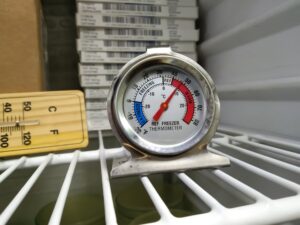
However, if you’d prefer to measure it yourself or your commercial fridge freezer doesn’t have a readout, you can place a thermometer between frozen food bags. After 8 hours, remove it to discover if your freezer is set to -18°C.

How to set your freezer’s temperature

Freezer temperature

If your freezer isn’t operating at the ideal temperature range, you’ll need to manually adjust the temperature. This is typically straightforward to do using the appliance’s temperature controls, which could consist of a rotary dial, buttons, or touchscreen. 

However, as each cooling system is different, we recommend using the freezer’s manual for guidance, as the instructions will be tailored to your exact model.

Tips for maintaining a normal freezer temperature

Our refrigeration specialists suggest the following tips to ensure you keep your freezer at the ideal temperature:

  • Check your commercial freezer temperature daily to ensure food is stored safely.
  • Try not to jam-pack your freezer shelves or compartments – a full freezer may block internal air vents, preventing cold air from dispersing and causing internal temperatures to rise.
  • Keep the refrigerator door and freezer door shut as much as possible to prevent warm air from infiltrating.

By paying close attention to your freezer temperatures, you’ll effectively maintain health and safety regulations, and even prevent costly repairs down the line!

Get in touch for all your commercial refrigeration needs

If you’d like to invest in a supreme quality commercial refrigeration system to meet all your business needs, why not contact us today?

Our team is more than happy to answer any questions you may have regarding commercial refrigeration and freezing. We offer a full range of high-quality and trustworthy commercial refrigeration repair services and commercial equipment from experienced engineers to meet your specific needs.

The Role of Blast Chillers in Commercial Kitchens

In the fast-paced environment of commercial kitchens, ensuring food safety and quality is paramount.

Blast chillers are an essential tool for any business that prepares food in advance and needs to cool it quickly for storage.

In this blog, we’ll explore why blast chillers could be a game changer for your commercial kitchen operations.

Blast chiller

What is a Blast Chiller?

Blast chillers are designed to cool food to a safe temperature much faster than a standard refrigerator or freezer can.

They work by rapidly pulling heat from food using powerful fans and evaporators, which circulate very cold air at high speeds.

This accelerated air movement ensures quick and uniform cooling of the food, significantly reducing the cooling time.

By swiftly cooling hot food in this way, blast chillers minimise the time it spends in the ‘danger zone’ of 5°C and 63°C, which is the optimal temperature for bacterial growth.

The Benefits of Using a Blast Chiller

  •       Food Safety: The fast-cooling process helps to reduce the risk of foodborne illnesses by limiting bacterial growth.
  •       Quality Preservation: As blast chillers cool food quickly and evenly, the texture, flavour, and nutritional value are preserved. This is particularly important for delicate dishes, where quality can deteriorate if the food is cooled too slowly.
  •       Efficiency: Preparing orders in advance is much easier with a blast chiller. Commercial kitchens can operate more smoothly during busy periods by chilling their pre-cooked items swiftly and safely.
  •       Waste Reduction: By maintaining food quality and extending the shelf life of pre-cooked dishes, blast chillers can also significantly reduce food wastage.

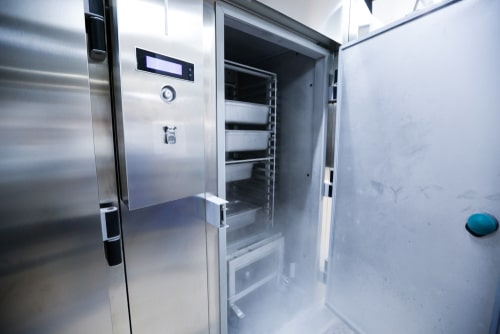
Interior of a blast chiller

Ideal Applications for Blast Chillers

Blast chillers are incredibly versatile, making them suitable for a variety of settings within the food service industry.

They are especially valuable in environments like catering operations, hospitals, and busy restaurants, where large quantities of food are prepared in advance.

Does My Commercial Kitchen Need a Blast Chiller?

When considering whether to incorporate a blast chiller into your commercial kitchen setup, there are several factors to consider.

You’ll need to think about the types of dishes you serve, the volume of food that may need to be cooled rapidly at any given time, and your overall kitchen workflow.

Kitting out your commercial kitchen with the appropriate refrigeration equipment for your needs will allow you to effectively handle busier periods, whilst also improving food safety and customer satisfaction.

Wide Range of Commercial Refrigeration Solutions

The decision to invest in a blast chiller can significantly affect both the quality of your food and the efficiency of your commercial kitchen.

At J&M Refrigeration, we specialise in commercial refrigeration solutions tailored to meet the diverse needs of the food industry.

If you’re looking to improve your food service operations with advanced cooling technology, take a look at our range of blast chillers.

For any questions about the best refrigeration equipment to meet your unique needs, get in touch with our helpful team today on 0121 544 0555

Everything you need to know about refrigerator and air conditioning servicing in winter

Refrigerator and air conditioning maintenance is important year-round, but especially in the wintertime. Find out why in this article.

Winter Maintenance J&M Refrigeration

Winter is here.

Whether you love or loathe the colder months, there’s no denying (or escaping) it.

With the season in full swing, there are some crucial tasks you need to check off your to-do list, with refrigerator and air conditioning servicing being just two of them.

But why are they so important?

They may sound like summer-exclusive chores, but you should trust the experts when they say they’re important year-round.

Find out why in this article.


Why is regular refrigerator maintenance so important?

Many businesses – from butchers and bakers to large chain supermarkets, nightclubs, and restaurants – all rely on commercial refrigeration systems.

Not only do they help ensure that your stock is kept at optimal temperatures, but they also help keep business up and running and ensure that your goods are safe for your customers to consume.

Without them, things would go wrong quickly.

Sales would come to a halt, your stock would go to waste, and your energy bills would skyrocket.

Also, as your AC will be blasting hot air during the winter months to keep your retail space at a comfortable temperature for your staff and patrons, your refrigerators will need to work a little harder to keep the contents nice and cool. So, making sure your commercial refrigeration unit is in tip-top condition and equipped to deal with these warmer internal temperatures is essential, and key to avoiding costly breakdowns or any of the disasters mentioned above.


Why is regular air conditioning maintenance so important?

Many people think that air conditioning maintenance isn’t essential in winter, but this couldn’t be further from the truth.

Although, yes, you may not be using your air conditioning unit as much as you do in the summer, this doesn’t mean you should neglect it until then, and it’s non-negotiable if you want to avoid costly energy bills, repairs, and irreversible damage when summer arrives.

For example, the extreme cold temperatures, that we’re no stranger to here in the UK, can cause the pipes in your AC unit to freeze up. And if this isn’t carefully inspected, it could cause them to break and split – rendering the system useless.


How to maximise the lifespan of your industrial refrigerator and air conditioning units

On average, commercial refrigerators last about 10-15 years, but they’ve been known to reach 20 years if taken care of properly.

Commercial air conditioning units, on the other hand, are expected to last a little longer, with most units lasting between 15-20 years.

Regular maintenance is the best way to maximise both your units’ lifespans.

Even if you aren’t experiencing any problems with your commercial refrigeration or air conditioning system, cleaning and professional servicing (both vital parts of maintenance) are still non-negotiable.

You should clean your refrigerator superficially once every day, give it a deep clean once every four weeks, and have it serviced by a licenced professional every three to six months, to make sure everything is still running as it should be.

How often you clean your air conditioning unit depends on how much you use it, but as a general rule, it should be cleaned around every 3-4 months, and professionally serviced once annually.

How J&M Refrigeration can help

Here at J&M Refrigeration, we’re experts in commercial refrigeration and air conditioning systems.

Our team is fully qualified and has years of experience in maintaining and servicing commercial air conditioning and refrigeration units. No matter if it’s time for your next service, or if you need one of our 24/7 maintenance contractors to tend to a breakdown, we’re here and more than happy to help.

How does commercial air conditioning differ from residential air conditioning?

Commercial and residential air conditioning units are both built to serve very different purposes. Discover how they differ in this article!

commercial air conditioning

From office buildings and shopping centres to universities and leisure facilities, air conditioning units have been a staple in all sorts of commercial settings for many years.

But homeowners are only just starting to look into the benefits of investing in one for their properties.

In the height of summer, they help keep our homes cool and comfortable, and for some of us, they’ll become just as important as our boilers in the winter.

With so many different AC units on the market – including both commercial and residential varieties – it can be difficult to know which is best for your space, as they’re all designed with specific purposes in mind.

Here, our experts walk you through the differences between residential and commercial air conditioning to help you decide which is best for you.


So, what are the differences between commercial and residential air conditioning systems?

There are a few key differences between commercial and residential air conditioning units, including:

Size

Commercial air conditioning units are much bigger than those used in residential settings, as they need to cool a much larger space.

Whilst a residential AC unit needs to cool a larger quantity of smaller rooms – usually around 5-10 – a commercial unit will only need to cool 1-2, but they’re much bigger.

Think of a supermarket shop floor, for example. This counts as one room and often is bigger than multiple rooms in your home put together.

To cool such a large area, commercial units also have much bigger fans, evaporators, compressors, and blowers than residential units.

Cost

Being much bigger and more advanced, it probably comes as no surprise that commercial air conditioning units are much more expensive than their residential counterparts.

A commercial HVAC system will also bump up your energy bills, due to the amount of power that’s needed to keep larger spaces cool.

Whereas it’s possible to install your own air conditioning system at home, commercial air conditioning systems should only be installed by an expert. But this can sometimes be pricey.

Not only are you paying for the engineer’s skill and expertise, but you’re also paying to ensure you have a fully functioning, energy-efficient system, too.

Cooling methods

Residential and commercial air conditioners use entirely different cooling methods.

Residential units are typically located in the middle of a  property and connected to ducts that run throughout the building and connect to vents in several different rooms.

Commercial units, however, are often installed outdoors on the roof, as they’re too big to be located anywhere indoors. But this means that cooling methods differ massively.

Rooftop air conditioning systems usually combine both cooling and heating systems to easily control the temperature and humidity of the premises throughout the year.

Commercial systems connect heating, ventilation, and cooling systems on all floors of the building, which control not only the temperature but the humidity within the building, too.


Can I use a commercial HVAC system in a residential property?

As we mentioned earlier, both commercial and residential HVAC units are built to serve entirely different purposes, so using commercial AC in residential buildings (and vice versa) isn’t ideal.

Here at J&M Refrigeration, we’re experts in commercial air conditioning, and our team would be more than happy to help you choose the perfect commercial HVAC unit for your premises.


Get in touch!

For more information about the AC units we supply, or for our specialist recommendations, give us a call today on 0121 544 0555 or email us at sales@jamrefrigeration.co.uk and we’ll get back to you shortly.

Can I use a commercial refrigerator at home?

From enhancing inventory organisation and driving sales, to ensuring products are safe for customers to consume, commercial refrigeration has many advantages for businesses operating in the hospitality sector.

We often get asked about the differences between commercial and domestic refrigeration, and although they may be subtle, they’re definitely there.

Here, our experts walk you through the pros and cons of commercial refrigeration and why it may or may not be the best choice for your home kitchen.


What are the differences between commercial and domestic refrigeration?

  • Size – commercial and domestic refrigeration units differ in size and capacity.
  • Refrigerators designed for home kitchens are much smaller than those that are intended for use in commercial kitchens, as more storage space is needed to accommodate stock.
  • Materials – commercial refrigeration units are made from much higher-grade materials – like stainless steel – for increased strength and durability. Whereas domestic fridges are made from plastic components, which aren’t as strong or long-lasting.
  • Features – with adjustable shelves, sturdy baskets and out-of-hours locks, commercial fridges boast some amazing features. Though home fridges may feature some of these things, like shelves and baskets, they’re not always as durable as the ones found in commercial units.

Pros of commercial refrigeration

There are plenty of ways you can benefit from investing in a commercial fridge for your kitchen at home, including:

  • You’ll have endless storage space

If you have the space for a commercial refrigeration unit in your home kitchen, then you’re sure to benefit from the additional space.

Having more shelves and drawers means you have much more room for all of your food and drink, which is ideal if you have a large family to feed.

If you’re planning on investing in a commercial fridge for your kitchen at home, we suggest measuring your space first to make sure that it’ll definitely fit and doesn’t take up all the room in your kitchen.

  • Aesthetics

If you’ve taken a more minimalistic approach to the décor in your kitchen, the stainless steel exterior of a commercial refrigerator is sure to complement it perfectly. And, being made from such high-quality materials, commercial refrigerators can withstand much more wear and tear, and will last much longer than their domestic counterparts which are made mostly of plastic.

  • There are more features

With a commercial fridge comes many more state-of-the-art features, which admittedly, aren’t necessarily needed in a domestic kitchen. But if you’re a passionate home chef, you’ll thank yourself for making the investment.


Cons of commercial refrigeration

Like most things, investing in commercial refrigeration for your home comes with potential drawbacks, and just some of them include:

  • They’re harder to install

Commercial fridge installation is much more complicated than fitting a domestic fridge, and you’ll need to consult a professional to help you.

  • They require more complex maintenance

Whereas fridges intended for home use only require simple cleaning and checks every now and then, commercial fridges require much more frequent maintenance, including coil and gasket cleaning and thermostat monitoring, checking refrigerant levels and more.

  • They take up lots of space

Having more storage space may be beneficial for some – but not everyone.

If you’re lucky enough to have a large kitchen, space won’t be an issue. However, if your square footage is limited, the size of a commercial fridge just isn’t practical.


Need help choosing the perfect commercial refrigerator?

Whether you’re considering commercial refrigeration for your kitchen at home, or you’re looking for recommendations for your restaurant kitchen, our experts are here to help.

At J&M Refrigeration, we have decades of experience in the industry, and are best placed to offer advice and recommendations.

Give us a call today on 0121 544 0555 or send us a message via our online contact form and we’ll be in touch with more information!

Pros and cons of remote refrigeration systems

Considering investing in a remote refrigeration system for your business? Here’s everything we think you should know before you do.

Remote refrigeration systems are most often seen in larger establishments – like supermarkets and busy restaurant kitchens, or anywhere else where it isn’t suitable to keep condensers and ventilators due to heat and humidity.

Instead of the condensing unit being built into the commercial fridge, it is usually located elsewhere – usually outside of the building or in a separate room – to control the temperature of your refrigerator.

Like everything, remote refrigeration systems have many benefits, but they aren’t without their drawbacks.

In this post, our commercial refrigeration experts reveal the pros and cons of remote refrigeration, and how it could help your business.

Remote Refrigeration Pros and Cons- J&M Refrigeration

Pro: They cost less to run

Remote refrigeration systems can be much more energy efficient, especially if they’re installed in a cool, outdoor environment.

They can also help reduce your energy bills by reducing the amount of heat your fridge produces that your air conditioner needs to deal with.

Pro: They eliminate noise

Compressors and condensers work hard to maintain the temperature of your commercial refrigerator, and with all this hard work comes lots of buzzing and whirring sounds.

This can become pretty bothersome, especially if you work in a supermarket and have rows upon rows of fridges making a racket. But with a remote refrigeration system, you’ll no longer have to deal with this, as the compressor and condenser will control the temperature of your unit from elsewhere.

You’ll notice a considerable difference in noise levels and be able to work peacefully until it’s time to clock out.

Pro: They help save space inside your refrigerator

Compressors. Condensers. Fans.

They all take up a fair bit of space within your commercial fridge.

But since most of the cooling machinery is located outside of your commercial refrigerator, you’ll have much more space to keep and organise your stock – which could, in turn, allow you to serve more customers and increase your sales.

Con: They cost more to install

Remote refrigerators need to be installed by a professional.

They’ll need to run lines from your commercial kitchen to wherever you want to install the system, which can be a tedious and time-consuming process.

Of course, you’ll pay different prices depending on who you work with, as well as the brand/manufacturer of the unit, but generally, jobs such as these don’t come cheap, so it’s important to make sure you have the room in your budget.

Con: They’re more difficult to maintain

Remote refrigeration systems are much larger than the compressors and condensers found in typical commercial refrigeration units.

Because of this, they can be much more difficult to service, maintain and repair –  and you guessed it – as it’s more complicated, it’ll cost you more if things go south.

With cooling equipment located elsewhere, it can also be difficult to tell when things go wrong, and it may take a while for you to discover a breakdown.

This is an easily avoidable issue, though, and you can invest in a remote refrigeration monitoring system – which will alert you (in real-time) when sudden temperature changes occur so that you can investigate and rectify the issue as soon as possible.

Need more info?

Not sure if a remote refrigeration system is right for your business? Want to find out more about the benefits before you take the leap?

We’re here for you.

Our team has over 30 years of experience in the commercial refrigeration industry and would be more than happy to share their expertise.

Give us a call today on 0121 544 0555 or email us at sales@jamrefrigeration.co.uk and we’ll get back to you with more information shortly!

Why your fridge is freezing and how to fix it

Commercial refrigerators are one of, if not the most important pieces of kit for many businesses. From butchers and bakers to pubs, clubs and cafes – many businesses rely on commercial refrigeration day to day to keep their establishments up and running and their customers satisfied. So, when there’s a fault, you can only imagine the amount of bother it causes. Freezing is an all-too-common issue with commercial refrigeration units, and it can happen for many different reasons.

In this article, our experts at J&M Refrigeration explore the top reasons why your fridge is freezing, and how you can go about fixing it.

Read more

Call Now Button